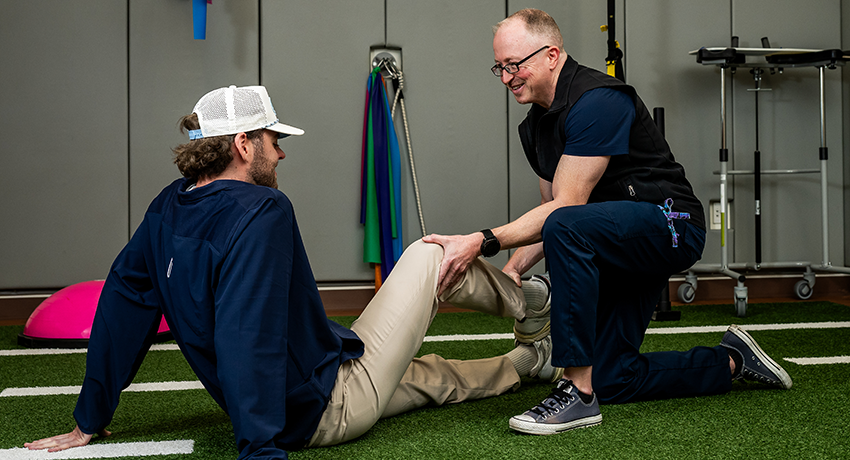
At UTMB Health, we provide advanced, compassionate care for serious and sudden injuries. From fractures and dislocations to complex soft tissue damage, our multidisciplinary team is equipped to treat a wide range of traumatic conditions. We use the latest surgical and nonsurgical techniques to focus on relieving pain, restoring function, and helping you return to the activities you love. Whether your injury occurred at work, on the road, or during sports, we’re here to guide you through every stage of recovery.
Please note, most traumatic injuries are treated in the emergency department.
Conditions We Treat
Acetabular Fractures
Overview:
An acetabular fracture is a break in the socket portion of the hip joint. It usually occurs from high-energy trauma and can disrupt joint stability. Precise alignment is essential to prevent arthritis and preserve hip function.
Symptoms:
- Deep hip or groin pain
- Inability to walk or bear weight
- Swelling or bruising around hip
- Leg appearing shorter or rotated
- Possible nerve symptoms in leg
Treatments & Procedures:
- Traction or bed rest (for certain stable fractures)
- Surgical repair for displaced fractures
- Pain and swelling management
- Postoperative rehabilitation
- Long-term monitoring for arthritis
Acute Fractures of Upper & Lower Extremities
Overview:
Acute fractures in the arms or legs occur suddenly, often from trauma such as falls, sports injuries, or motor vehicle accidents. They require prompt evaluation to assess bone alignment and potential nerve or vessel damage. Early treatment helps restore mobility and function.
Symptoms:
- Sudden severe pain
- Visible deformity or abnormal position
- Swelling and bruising
- Inability to bear weight or use limb
- Numbness or tingling (if nerves affected)
Treatments & Procedures:
- Immobilization with splint or cast
- Realignment (closed or open reduction)
- Surgery for unstable fractures
- Pain and swelling control
- Rehabilitation exercises
Comminuted Fractures
Overview:
A comminuted fracture occurs when a bone is broken into three or more fragments, usually due to high-energy trauma. These fractures are often unstable and may be associated with significant soft tissue injury. Treatment aims to restore bone alignment and promote stable healing.
Symptoms:
- Severe pain
- Visible deformity
- Extensive swelling and bruising
- Inability to move affected limb
- Possible open wound if bone punctures skin
Treatments & Procedures:
- Surgical stabilization with plates, screws, or rods
- External fixation in severe cases
- Bone grafting if needed
- Pain control and early mobilization
- Physical therapy after healing
Compartment Syndrome
Overview:
Compartment syndrome occurs when swelling or bleeding increases pressure within a closed muscle compartment, cutting off circulation to muscles and nerves. This can result from fractures, crush injuries, or tight bandages. Without prompt treatment, compartment syndrome causes irreversible muscle and nerve damage, sometimes requiring amputation. It is considered a surgical emergency.
Common Symptoms:
- Severe pain out of proportion to the injury
- Pain that worsens with passive stretching
- Swelling, tightness, or firmness in the limb
- Numbness, tingling, or paralysis in severe cases
- Loss of pulse in advanced stages
Treatments & Procedures:
- Emergency fasciotomy (surgical release of pressure)
- Removal of constrictive bandages or casts
- Wound cleaning and debridement if tissue damage occurs
- Pain management and rehabilitation
- Secondary reconstructive procedures after healing
Complex Fractures
Overview:
A complex fracture involves multiple breaks, significant bone displacement, or damage to surrounding soft tissues, nerves, or blood vessels. These injuries often result from high-energy trauma such as motor vehicle accidents, falls from height, or severe sports injuries. They require specialized orthopedic care to restore bone alignment, protect function, and reduce the risk of long-term complications.
Symptoms:
- Severe pain at injury site
- Visible deformity or abnormal limb position
- Significant swelling and bruising
- Inability to move or bear weight
- Numbness or loss of pulse (if vessels are involved)
Treatments & Procedures:
- Emergency stabilization of limb
- Surgical fixation with plates, screws, or rods
- Possible external fixation devices
- Soft tissue repair (tendons, ligaments, vessels)
- Pain management and infection prevention
- Intensive physical therapy after healing
Crush Injuries
Overview:
Crush injuries occur when a body part is subjected to extreme pressure, damaging skin, muscle, nerves, and blood vessels. These injuries can cause severe bleeding, swelling, and tissue death, sometimes leading to systemic complications such as crush syndrome (toxic muscle breakdown). Immediate treatment is essential to prevent permanent disability or life-threatening complications.
Common Symptoms:
- Severe pain and tenderness
- Swelling and bruising
- Visible deformity or crushed appearance
- Numbness or tingling due to nerve damage
- Loss of movement or weakness in affected area
- Open wounds or bleeding (in some cases)
- Pale or cold skin if blood flow is compromised
Treatments & Procedures:
- Immediate evaluation and stabilization of the injury
- Pain management with medications
- Cleaning and dressing of open wounds to reduce infection risk
- Splints or casts to support and protect injured bones and tissues
- Surgical treatment (e.g., fracture repair, tissue reconstruction, fasciotomy to relieve pressure, or debridement of dead tissue)
- Antibiotics to prevent or treat infection
- Intravenous (IV) fluids to help prevent kidney damage in crush syndrome
- Hyperbaric oxygen therapy in select cases
- Physical therapy to restore strength, mobility, and function during recovery
- Amputation in severe cases with extensive tissue damage
Dislocations
Overview:
A dislocation occurs when one or more of the bones are forced out of their normal position at a joint, often due to trauma such as a fall, sports injury, or direct blow. This injury disrupts the alignment of the joint and can damage surrounding ligaments, tendons, and nerves. It most commonly affects individuals involved in high-risk activities or occupations and older adults who are more prone to falls. Dislocations can occur in almost any body joint, but the most affected ones are the shoulder, finger, knee, elbows, hip, and jaw joints.
Symptoms:
- Intense pain at time of injury
- Visible deformity or misalignment of joint
- Swelling and bruising
- Inability to move affected joint
- Numbness or tingling (if nerves are compressed)
Treatments & Procedures:
- Manual repositioning of dislocated joint under local or general anesthesia
- A splint or cast to allow ligaments and soft tissues to heal
- Surgery, if dislocation is complex, unstable, or involves fractures
- Physical therapy to help restore strength, mobility, and joint function after immobilization or surgery
- NSAIDs and ice to reduce pain and inflammation
Fracture Malunions & Nonunions
Overview:
A malunion occurs when a fracture heals in the wrong position, while a nonunion happens when a fracture fails to heal entirely. Both can cause pain, deformity, and loss of function. These issues may require corrective surgery.
Symptoms:
- Persistent pain at fracture site
- Visible deformity
- Weakness or instability in affected limb
- Limited range of motion
- Difficulty with daily activities
Treatments & Procedures:
- Surgical realignment
- Bone grafting for nonunion
- Internal fixation (plates, screws, rods)
- Physical therapy after correction
- Addressing underlying bone health issues
Fracture-Dislocations
Overview:
A fracture-dislocation occurs when a bone breaks and the joint it forms is also dislocated. This injury often results from high-energy trauma, such as sports collisions or vehicle accidents, and can cause significant damage to surrounding ligaments, tendons, and nerves. Prompt treatment is essential to restore alignment, stabilize the joint, and prevent long-term disability.
Symptoms:
- Severe pain
- Visible deformity or abnormal joint position
- Swelling and bruising
- Inability to move joint
- Numbness or tingling (nerve injury)
Treatments & Procedures:
- Immediate reduction to realign joint and bone
- Immobilization with cast or brace
- Surgical fixation for unstable injuries
- Pain control and swelling management
- Physical therapy to restore motion and strength
Fractures Around Joint Replacements
Overview:
Periprosthetic fractures occur in the bone surrounding a joint replacement implant, such as a hip or knee prosthesis. They may be caused by trauma, implant loosening, or weakened bone. Treatment is complex due to the presence of the implant.
Symptoms:
- Pain around replaced joint
- Swelling and bruising
- Difficulty bearing weight or using limb
- Visible deformity
- Possible instability of the implant
Treatments & Procedures:
- Surgical fixation around implant
- Revision joint replacement if implant is loose
- Bone grafting
- Pain control and mobilization support
- Rehabilitation therapy
Ligament & Tendon Tears
Overview:
Ligament and tendon tears are common injuries that can affect people of all ages, especially those who are physically active. Ligaments connect bones to other bones, while tendons connect muscles to bones. Tears can range from mild to severe, and they may result from sudden trauma or repetitive overuse. Sports injuries, accidents, and improper footwear are common causes.
Symptoms:
- Sudden sharp pain
- Swelling and bruising
- Weakness or joint instability
- Reduced range of motion
Treatments & Procedures:
- Immobilization to allow natural healing
- Physical therapy to restore strength and flexibility
- Medications for pain relief and swelling reduction
- Surgery for full tears or severe damage
Limb Length Discrepancies Before & After Trauma
Overview:
Limb length discrepancy refers to one arm or leg being shorter than the other, which may be preexisting or result from trauma, such as fractures that heal improperly or growth plate injuries in children. Significant differences can cause gait problems, joint strain, and functional limitations.
Symptoms:
- Noticeable difference in limb length
- Limping or altered gait
- Hip, knee, or back pain
- Difficulty with balance or certain activities
- Muscle fatigue in longer limb
Treatments & Procedures:
- Shoe lifts or orthotics (for minor differences)
- Physical therapy to improve mobility
- Surgical limb lengthening or shortening
- Corrective osteotomy for bone alignment
- Ongoing monitoring in growing children
Multiple Fractures in the Same Limb
Overview:
Multiple fractures in the same limb occur when more than one bone or more than one site of the same bone is broken at the same time. Often caused by high-impact trauma, these injuries can significantly impair limb function and may involve complex treatment strategies.
Symptoms:
- Intense localized pain
- Significant swelling and bruising
- Deformity or abnormal limb position
- Inability to bear weight or move limb
- Numbness or loss of circulation (if vessels affected)
Treatments & Procedures:
- Immediate immobilization and stabilization
- Surgical fixation with plates, screws, rods, or external fixators
- Repair of soft tissue damage
- Pain management and swelling control
- Structured rehabilitation program
Muscle Injuries Associated with Trauma
Overview:
Traumatic muscle injuries occur from direct impact, overstretching, or sudden force, leading to strains, contusions, or tears. These injuries may occur alone or alongside fractures and joint injuries. Severity ranges from mild soreness to complete muscle rupture, and treatment focuses on restoring strength and preventing stiffness.
Symptoms:
- Pain at injury site
- Swelling or bruising
- Muscle weakness
- Stiffness or limited range of motion
- Tenderness to touch
Treatments & Procedures:
- Rest and activity modification
- Ice and compression to reduce swelling
- Gentle stretching and strengthening exercises
- Anti-inflammatory medications
- Surgical repair for severe tears
Open & Compound Fractures
Overview:
An open or compound fracture occurs when a broken bone pierces the skin, creating an open wound. These injuries carry a high risk of infection and often result from high-impact trauma. Prompt treatment is essential to clean the wound, stabilize the bone, and prevent complications.
Symptoms:
- Bone protruding through skin or visible in wound
- Severe pain
- Bleeding at injury site
- Swelling and bruising
- Inability to move affected limb
Treatments :
- Emergency wound cleaning and antibiotic therapy
- Surgical stabilization of fracture
- Soft tissue repair
- Tetanus vaccination if needed
- Rehabilitation to restore function
Pelvic Fractures
Overview:
Pelvic fractures range from stable cracks to severe breaks affecting multiple pelvic bones. They may result from high-energy trauma like vehicle accidents or from low-impact falls in people with osteoporosis. Severe cases may involve internal organ injury and require urgent care.
Symptoms:
- Pelvic or hip pain
- Difficulty walking or standing
- Swelling and bruising
- Numbness or tingling in legs
- Possible blood in urine (organ injury)
Treatments & Procedures:
- Pain control and bed rest (for stable fractures)
- Use of crutches or walker
- Surgical fixation for unstable fractures
- Physical therapy for mobility restoration
- Treatment of associated injuries
Simple Fractures
Overview:
A simple fracture is a clean break in a bone that doesn’t puncture the skin and typically involves minimal damage to surrounding tissues. These fractures are often caused by falls, direct impact, or twisting injuries. Prompt diagnosis and treatment help ensure proper healing and prevent long-term complications.
Symptoms:
- Localized pain
- Swelling
- Bruising
- Tenderness over the injury site
- Difficulty moving the affected limb
Treatments & Procedures:
- Immobilization with cast or splint
- Pain management
- Physical therapy after immobilization
- Surgery if bones are misaligned
Stress Fractures
Overview:
A stress fracture is a small crack or severe bruise within a bone, typically caused by repetitive stress or overuse over time, as opposed to a single injury. It's a common overuse injury, especially in weight-bearing bones like those in the foot or lower leg. Runners, dancers, and military personnel often experience these fractures.
Symptoms:
- Gradual onset of activity-related pain
- Localized tenderness
- Mild swelling
- Changes in gait
- Bruising
Treatments & Procedures:
- Avoiding high-impact activities
- Boot or brace if needed
- Gradual strength and mobility training
- Controlled return to activity to prevent recurrence
Additional Services & Procedures
We've highlighted some of the most common services—please explore the conditions list for treatments by condition.
Arthroscopy
Overview:
Arthroscopy is a minimally invasive surgical procedure used to diagnose and treat problems inside joints, such as the ones in the hip, knee, and shoulder joints. An orthopedic surgeon uses a small camera (called an arthroscope) and tiny instruments inserted through small incisions to view, repair, or remove damaged tissue in the joints.
Conditions Treated:
- Meniscus tears (knee)
- Rotator cuff tears (shoulder)
- Labral tears (shoulder or hip)
- ACL tears (knee)
- Shoulder impingement
- Cartilage damage (any joint)
- Joint instability (shoulder, ankle, knee)
- Loose bodies (any joint)
- Synovitis (any joint)
- Osteochondral lesions (ankle, knee)
- Frozen shoulder
- Tennis elbow
- Ankle impingement
- Hip impingement
- Elbow stiffness or contractures
Before the Procedure:
- Pre-op evaluation: Includes a physical exam, imaging (MRI or X-rays), and a review of medications.
- Instructions: You may be asked to stop eating or drinking 6–12 hours before surgery.
- Medications: Some medications may need to be paused (e.g., blood thinners).
- Anesthesia: Most arthroscopies are done under general or regional anesthesia.
After the Procedure:
- Recovery room: You’ll be monitored briefly before going home (most are outpatient).
- Pain & swelling: Ice and medication help manage this.
- Wound care: You’ll have small incisions covered with bandages. Keep them clean and dry.
- Activity restrictions: You may need crutches, a sling, or a brace.
- Physical therapy: Often begins within days to restore strength and mobility.
- Follow-up: You’ll see your surgeon to monitor healing and remove stitches if needed.
Complex Bone & Joint Reconstruction
Overview:
Complex bone and joint reconstruction involves advanced surgical techniques to repair or rebuild severely damaged bones and joints caused by trauma, infection, or deformity. These procedures restore function, alignment, and stability when simple repair isn’t possible. Reconstruction may include bone grafting, implant placement, or joint replacement to improve mobility and reduce pain.
Symptoms:
- Severe pain and deformity
- Limited or no joint movement
- Instability or weakness in affected limb
- Chronic swelling or stiffness
- Loss of function impacting daily activities
Treatments:
- Surgical reconstruction with bone grafts, plates, screws, or prosthetic implants
- Soft tissue repair around joints
- Postoperative pain control and infection prevention
- Intensive physical therapy to regain strength and range of motion
- Long-term follow-up for joint function and hardware integrity
Computer-Navigated Shoulder Replacement
Overview:
Computer-navigated shoulder replacement is an advanced surgical technique that uses real-time imaging and computer guidance to enhance the precision of implant placement during shoulder joint replacement. This technology allows surgeons to plan and execute the procedure with greater accuracy, improving joint alignment and function.
Conditions Treated:
- Shoulder osteoarthritis
- Post-traumatic arthritis
- Proximal humerus fracture
Before the Procedure:
Before surgery, you’ll have a thorough medical evaluation that includes a review of your health history, a physical exam, and imaging, such as X-rays or CT scans. These scans are used to create a 3D model of your shoulder, allowing your surgeon to plan the procedure with high precision. In some cases, pre-surgery physical therapy (prehab) may be recommended to improve shoulder strength and mobility in preparation for recovery..
After the Procedure:
After the procedure, our care team will monitor you as you wake up from anesthesia and manage any discomfort with pain medications. Most patients stay in the hospital for one to two days, but some may return home the same day, depending on individual circumstances. Expect to wear a sling for a few weeks and undergo physical therapy to help restore movement and gradually build strength. Follow-up appointments will be scheduled to track your healing and implant position. While most people return to light daily activities within a few weeks, full recovery typically takes three to six months.
Minimally Invasive Surgery
Overview:
Minimally invasive surgery for traumatic injuries involves the use of small incisions and specialized tools, including cameras, to diagnose and treat fractures, ligament tears, and joint damage with less harm to surrounding tissues. Compared to traditional open surgery, it offers benefits like reduced pain, smaller scars, quicker recovery, shorter hospital stays, and lower infection risk. This precise approach helps restore function efficiently while minimizing additional trauma during repair.
Conditions Treated:
- Fractures
- Torn ligaments or tendons
- Joint injuries
- Soft tissue injuries
Before the Procedure:
- Preoperative evaluation including physical exam, imaging, and medical history review
- Discussion of risks, benefits, and expected outcomes with your surgeon
- Possible fasting and medication adjustments
- Anesthesia consultation and preparation
After the Procedure:
- Small incisions with less pain and scarring than open surgery
- Initial immobilization or use of a brace/sling depending on injury
- Early pain management with medications
- Physical therapy to restore strength and mobility starting soon after surgery
- Follow-up visits to monitor healing and remove stitches or hardware if needed
Orthopedic Fixation
Overview:
Orthopedic fixation is a surgical method used to stabilize broken bones or injured joints by securing them with hardware such as plates, screws, rods, or pins. This technique promotes proper bone healing, restores alignment, and allows early movement. Fixation is often necessary for complex, unstable, or displaced fractures to ensure stability and prevent long-term complications.
Symptoms:
- Pain and swelling at fracture site
- Deformity or abnormal limb position
- Inability to use or bear weight on affected limb
- Instability or movement at fracture site
- Bruising or tenderness
Treatments:
- Surgical placement of fixation devices (plates, screws, rods, pins)
- Immobilization with casts or braces after surgery
- Pain management and infection prevention
- Early rehabilitation to restore function
- Follow-up imaging to monitor healing progress
Can’t find what you're looking for? Contact the care team at the clinic for assistance.
Your Care Team
Each provider may treat different conditions. Click on a profile to see their areas of specialty.

Frequently Asked Questions
-
What’s considered a traumatic injury?
A traumatic injury is damage to the body caused by a sudden physical force, such as a fall, sports accident, vehicle collision, or direct blow. These injuries can affect bones, joints, muscles, ligaments, tendons, and soft tissues. -
What treatments are available for traumatic injuries?
Treatment depends on the injury’s type and severity. Options include immobilization with splints or casts, minimally invasive surgery, open surgery, orthopedic fixation, soft tissue repair, and rehabilitation therapy. -
Will I need surgery if I sustain a traumatic injury?
Not all traumatic injuries require surgery. Many can be treated with non-surgical methods. Your orthopedic team will recommend the approach that offers the best chance for full recovery.
All Orthopedic Specialties
Our Locations
- 2020 East Highway 6
- M–F: 7 a.m.–6 p.m.
- (281) 585-2530
- (281) 585-3819
- Website
- 2309 West Mulberry Street
- M–F: 8 a.m.–5 p.m. and Friday 8 a.m.–12:00 p.m.
- (979) 849-9557
- (979) 849-0789
- Website
- 250 Blossom Street
Suite 110 - M–F: 8 a.m.–5 p.m.
- (832) 505-1200
- (832) 632-7866
- Website
- 1715 South Friendswood Drive, 4th Floor
- M–F: 8 a.m.–5 p.m.
- (832) 505-1200
- (281) 482-3963
- Website
- 2240 Gulf Freeway South
- M–F: 8 a.m.–5 p.m.
- (832) 505-1200
- (281) 309-0137
- Website
- 400 Harborside Drive
Suite 109, Entrance A - M–F: 8 a.m.–5 p.m.
- Adult & Pediatric
- (409) 266-7846
- (409) 772-5890
- Website
- 10121 Emmett F. Lowry Expressway
- M–F: 7:30 a.m.–5 p.m.
- (832) 505-1200
- (409) 986-7890
- Website