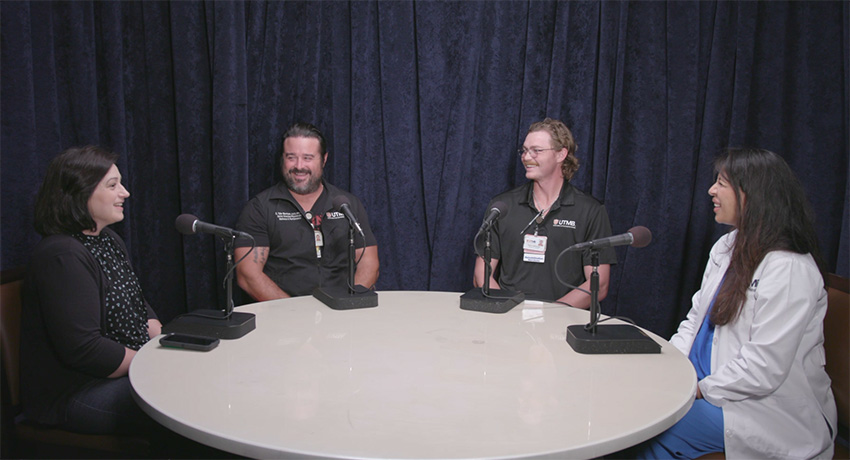
As weight management care continues to evolve, incorporating safe, evidence-based movement is essential for preserving lean muscle mass and supporting long-term metabolic health. In Episode 6 of UTMB Health Conversations on Metabolic Health and Wellness, hosts Dr. Sarah Samreen and Dr. Andrea Stark welcome exercise physiologists Cade Sattelmaier and Tyler Morrison to discuss the power of exercise as medicine, how to overcome gym intimidation, and why a slow-cooker approach beats quick fixes every time.
Exercise as medicine: Beyond the gym stereotype
Navigating fitness information can be overwhelming, especially with the prevalence of conflicting advice on social media and elsewhere online. Unlike personal trainers, certified exercise physiologists have advanced training in kinesiology and work with individuals to develop safe, effective exercise plans based on their medical history, previous injuries, and health goals.
Working alongside physical therapists, physicians, and rehabilitation specialists across the UTMB Health System, exercise physiologists design structured, evidence-based movement programs that can complement clinical treatments such as bariatric surgery and anti-obesity medications.
Protecting muscle mass and adopting the “slow-cooker approach”
With effective weight loss interventions becoming more common, patients often worry about losing lean muscle mass as they lose fat. The panel emphasizes that resistance training and physical activity are vital for preserving muscle mass, supporting metabolic health, and helping offset the natural decline in muscle that occurs with aging. However, rather than chasing arbitrary numbers or trying to overhaul habits overnight, patients are encouraged to adopt a sustainable approach.
“In today’s society, we want everything to be right now,” Morrison said. “With weight loss or strength gains, we want to be bigger, faster, stronger right now, or healthier right now. And I like to talk to people about the slow-cooker approach. It’s not a microwave. Let it take time.”
Overcoming gym intimidation and finding accessible resources
Walking into a busy fitness center for the first time can be intimidating, particularly for individuals with joint discomfort or those who feel self-consciousness. Experts recommend starting smal by scheduling movement into your calendar the same way you would any other appointment, exercising during nonpeak hours, or partnering with a friend for accountability.
For those looking for community-based or budget-friendly alternatives to traditional gyms, several programs can help:
UTMB Alumni Field House: Offers instructional fitness resources, video guides, and training tips through its social media channels.
Walk With a Doc: A free community program that brings together local physicians, healthcare providers, and community members for walks and informal conversations about health.
SAIL (Stay Active and Independent for Life): A national, evidence-based strength and fitness program offered through UTMB in Galveston and League City that helps older adults build strength, improve balance and reduce fall risk.
Understanding VO2 max and cardiorespiratory health
The conversation also explores VO2 max, a measure of how efficiently the body uses oxygen during exercise. While clinical testing can provide precise assessment, people can improve cardiorespiratory fitness and support long-term health by incorporating high-intensity intervals, such as stationary bike sprints, into their routines. Progress can also be tracked using simple measures, such as a mile-and-a-half walk or run.
The broader picture: Sleep, stress, and realistic goals
While movement is a cornerstone of metabolic health, the panel stresses that exercise is only one piece of the puzzle. Chronic sleep deprivation, elevated cortisol levels, and ongoing stress can undermine physical progress. True wellness relies on balancing physical activity with adequate protein intake, proper hydration, and realistic lifestyle changes that fit naturally into everyday life, whether that means volunteering to walk shelter animals, participating in other community service activities, or simply building consistency over time.
Ready to take the next step?
Whether you are exploring medical weight loss options, looking to build a safer strength-training routine, or trying to find local resources to stay active, UTMB Health offers a multidisciplinary team to support your health journey. You can visit UTMB Weight Loss Services to connect with our care team.
Be Part of the Next Episode
If you would like to submit a question for a future podcast episode, please fill out the form below. Please note, not every question will be selected for inclusion in the podcast: